


Bestsellers

$120.00$99.99

$80.00$71.99

$50.00$39.99

$80.00$71.99

$50.00$39.99


$65.00

$65.00

$65.00

$499.00


$199.00
$120.00$99.99
$80.00$71.99
$80.00$71.99

$80.00$71.99
Why Breathy?
93.5% Feel the Difference
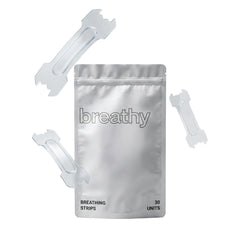
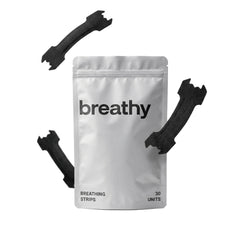
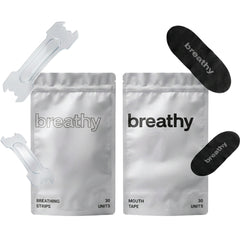
A single band that lifts your nasal passage open so air moves more freely through it.

Sweat doesn't move it
Henkel adhesive is built to hold through your sweatiest session, not just the easy ones.

Tested where it counts
Not just in the lab. Before this shape shipped, it went through real training sessions.

Breathy will upgrade your Sleep
-
Built for the long session

The band holds from the first minute to the last, not just the easy part.
-
Snore less and sleep better

Unlock deeper and more restorative sleep naturally by breathing through the nose.
-
Holds through anything

Light enough that you stop noticing it's there, strong enough that it doesn't move.


Frequently Asked Questions
-
Breathy strips and tape are drug-free, latex-free and dermatologically tested. Strips are for external use, single use, and up to 12 hours.
-
Many strips layer 2 or 3 thin PET strands. They work at first, but with movement, sweat or a long night, the strands can lift and come apart. When one goes, the lift goes with it.
Our 1PET band combines that strength into a single, solid piece. It doesn't split or peel, so it holds its shape and keeps your nose open all night or through your whole session.
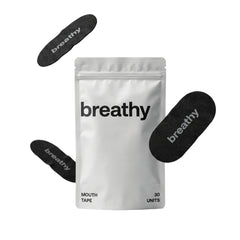
Our mouth tape uses Henkel adhesive and is infused with collagen, so it stays in place and feels soft on your lips. -
Whenever you want to breathe more easily through your nose: during sleep, training, pilates, yoga, breathwork, or simply while you work. Most people start at night, then add them to their practice.
-
At night, to gently keep your mouth closed and encourage nose breathing while you sleep. Some people also use it during calm activities like reading or meditation.
-
Start with clean, dry skin, with no oils or moisturiser. Place the strip across the lower part of your nose, just above the flare of your nostrils, and press gently for a few seconds. For mouth tape, close your lips softly and place the tape vertically or horizontally across them.
-
Do not use the tape with congestion, a cold, a deviated septum, asthma or other breathing problems, suspected or diagnosed sleep apnoea, a heart condition, or after alcohol or sedatives. Not for children. Remove it straight away if breathing feels difficult.
-
Free shipping over $70.00. National shipping price is $7.00.